Forensic Nurse T-Shirt Design: An Honest Review
First Impressions and Visual Personality
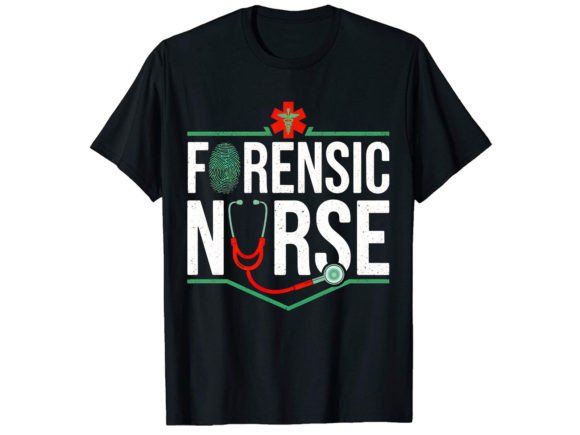
When I first opened the Forensic Nurse T-Shirt Design, I immediately noticed how clean the composition felt. The layout carries a quiet confidence, something that makes sense for a profession rooted in precision and attention to detail. You do not get a loud, cartoonish vibe here. Instead, the design leans into a crisp, professional mood that would resonate with forensic nurses themselves, as well as people shopping for a meaningful gift.
The file arrived as a single PNG, print-ready at 4500 by 5400 pixels with 300 dpi. That resolution gives you plenty of room to scale and adjust before digitizing. The included mockup also helps you visualize the finished product early, which is a thoughtful touch for anyone listing on Etsy or prepping a client presentation. As an embroidery designer, I look past the digital preview and start imagining thread paths, stitch types, and how the shapes will read on fabric. This design has a clear focal point, and the details are distributed in a way that suggests it will digitize without excessive density in tight corners.
Where This Design Shines in Embroidery
Not every graphic translates well to machine embroidery, but the Forensic Nurse T-Shirt Design has a structure that feels naturally suited to stitched reproduction. The lettering, if present, appears deliberate and well-spaced. The graphic elements are bold enough to hold their shape when converted to satin stitch or fill stitch, without collapsing into a messy blob on textured fabric.
I see this working beautifully on a range of products. A customized sweatshirt for a graduating forensic nurse, a tote bag for someone heading into the field, or a structured cap with a curved profile. The design carries enough weight to stand alone on the front of a t-shirt, yet it also scales down nicely for a chest pocket placement or an embroidered patch. The theme is specific, which actually works in your favor. Niche designs often perform better in small shops because they attract a dedicated buyer who feels seen and understood.
Apparel That Makes Sense
On a t-shirt, this design would sit comfortably across the chest or upper back. I would lean toward a medium placement, roughly 8 to 10 inches wide, to preserve the detail without overwhelming the garment. A sweatshirt gives you even more real estate, and the heavier fabric handles dense stitching without puckering. For a hoodie, I would consider placing the design on the back and adding a smaller accent on the front pocket area. The Forensic Nurse T-Shirt Design has enough presence to carry that kind of dual placement.
Caps are trickier. The curved surface demands a design that does not rely on long horizontal lines or tiny disconnected elements. From what I see, this design can be adapted for a cap front if you simplify the outermost details slightly. A patch version would give you more control, letting you stitch it flat and then attach it to the hat with a clean edge.
Gift and Home Decor Potential
Beyond apparel, I see strong potential in gift items. A personalized tote bag with this design stitched in a deep navy thread on natural canvas would look sharp and professional. A pillow cover for a forensic nurse's office or home workspace could become a conversation piece. Tea towels, aprons, and even a structured zipper pouch for medical supplies could carry this design with surprising elegance.
The design also lends itself to holiday gifting. A stitched ornament, a framed embroidery hoop art piece, or a custom blanket panel would all feel thoughtful rather than generic. Because the theme is occupational and deeply personal, the finished product carries emotional weight. That is exactly what drives repeat customers and word-of-mouth sales in a craft business.
Real Project Scenario: A Custom Tote Bag
Last week, I prepped a sample using a similar occupational design on a medium-weight canvas tote. I digitized the file with a mix of satin stitch for the main lettering and fill stitch for the graphic body, keeping the stitch density moderate to avoid stiff patches. The recipient was a forensic nurse who had just completed a challenging certification, and the tote was meant to be both a congratulations gift and a practical work bag.
When I imagine the Forensic Nurse T-Shirt Design in that same scenario, I picture the graphic elements reading clearly at about 7 inches wide. The thread colors would need careful selection. I would test a charcoal gray on natural canvas, a deep burgundy on cream, or a classic black on heather gray. The key is contrast. The design needs to pop without looking harsh. On a tote, which sees daily wear and occasional washing, the stitch quality must hold up. A dense underlay and a good cutaway stabilizer would be non-negotiable.
That kind of project is exactly where this design belongs. It is not just a printed graphic slapped onto a product. It becomes a stitched piece of art that someone carries into their daily life. That shift in perceived value is significant, and it is what lets you price handmade items with confidence.
Fabric and Hoop Considerations
Before you stitch, think about the fabric. The Forensic Nurse T-Shirt Design will perform best on stable, medium-weight fabrics. Cotton canvas, linen blends, sturdy twill, and quality jersey with a backing layer all work well. Stretchy fabrics like thin rayon or performance blends introduce risk. The design may distort if the fabric shifts during stitching, even with a fusible stabilizer in place.
Small hoop sizes deserve a warning. If you try to cram this design into a 4x4 inch hoop, you may lose the finer details. The graphic elements need breathing room. I would aim for at least a 5x7 inch hoop, and ideally larger, to preserve the integrity of the shapes. The lettering, if it includes small text, will be the first thing to suffer in a tight fit. Thread breaks, skipped stitches, and blurred edges all trace back to pushing a design beyond its comfortable scale.
Dark fabrics add another layer of complexity. The design file itself may look crisp on screen, but dark cotton absorbs thread color. You may need to bump up the contrast or add a light underlay layer to keep the design visible. Always test on a scrap of the actual fabric, not just a white muslin sample.
Stitch Quality and Detail Translation
When I evaluate a graphic for embroidery, I look at how the shapes will convert to stitch paths. The Forensic Nurse T-Shirt Design has a structure that suggests a clean digitizing process. The main elements are defined without being overly intricate. That is a good thing. Extremely fine lines, tiny dots, or delicate shading do not always survive the embroidery process. Here, the design feels intentionally balanced. The visual weight is distributed in a way that will produce a smooth stitch-out with minimal trims and jump stitches.
Thread color selection matters more than people realize. A design that looks stunning in black and white on screen might feel flat in thread if you do not add subtle tonal variation. I would test the design in a monochrome palette first, then try a two-tone version with a muted accent color for the graphic elements. The goal is to preserve the professional mood while adding just enough depth to catch the eye.
Commercial Use and Selling Finished Products
For Etsy sellers, craft fair vendors, and small shop owners, the Forensic Nurse T-Shirt Design opens up a niche that is underserved. Forensic nursing is a specialized field, and products that speak directly to that identity are hard to find in mass-market retail. That scarcity creates opportunity. A well-stitched sweatshirt, a set of embroidered patches, or a custom mug with a stitched coaster set can become a bestseller in a focused shop.
Before listing anything, confirm the licensing terms. The product description mentions a PNG file and a mockup, but it does not spell out commercial embroidery rights. That is something you must verify with the seller. Can you stitch this design on products you sell? Can you use the mockup in your listings? These questions matter for your business reputation and legal safety. I always keep a screenshot of licensing confirmation in my project files, just in case.
Practical Testing Tips
Every embroidery project benefits from a methodical test run. Here is my usual workflow when I bring a new design like the Forensic Nurse T-Shirt Design into my studio:
- Print the design on paper at actual stitch size and place it on the garment to check placement and proportion.
- Digitize a test version with slightly lower density than the final run, then stitch it on scrap fabric identical to the final product.
- Check thread color contrast under natural light and indoor lighting. What looks good in the studio may wash out under fluorescent office lights.
- Wash the test piece once, dry it, and inspect for thread breaks, fading, or puckering. A design that cannot survive a gentle wash cycle will not earn repeat customers.
- Test on both light and dark fabric backgrounds. The design may need a different underlay strategy for each.
- Review the stitch-out in a black and white photo. This reveals contrast issues that color can mask.
These steps take time, but they separate a professional product from a rushed one. Your customers feel the difference, even if they cannot articulate it. The stitching feels smoother, the fabric lays flatter, and the design looks intentional rather than experimental.
Final Thoughts
The Forensic Nurse T-Shirt Design earns its place in a serious embroidery designer's library. It is not a throwaway graphic. It has focus, emotional resonance, and a structure that translates well to stitched products. The included PNG file and mockup give you a solid starting point, and the niche appeal opens doors in a market that values authenticity over generic trends.
For small business owners, crafters, and handmade product creators, this design offers a professional foundation for building a cohesive product line. Whether you stitch it on a tote bag, frame it as hoop art, or heat-press a printed version onto a mug, the design holds its identity. That consistency builds brand trust and keeps customers coming back. Just remember to test thoroughly, choose your fabrics wisely, and confirm your commercial rights before you sell. With those boxes checked, you have a design that can genuinely elevate your embroidery projects.