Critical Care Nurse Design: A Stitcher's Honest Review
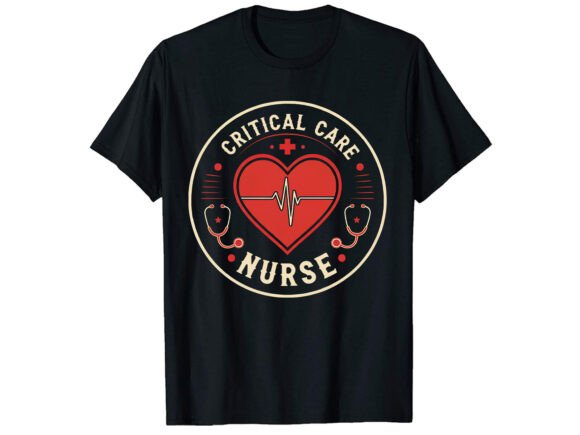
When I first opened the Critical Care Nurse T-Shirt Design file, I immediately felt the weight of the profession it represents. There is a quiet dignity in the layout, a balance between bold medical symbolism and the understated professionalism that critical care nurses carry every single shift. The design does not scream for attention, and that is precisely why it works. It speaks in a calm, confident tone, the kind of visual language that resonates deeply with healthcare workers and the people who love them.
I have been evaluating embroidery-ready artwork and digital design assets for over a decade, and I can tell you that not every graphic labeled "print-ready" holds up under real stitching conditions. The Critical Care Nurse T-Shirt Design arrived as a single high-resolution PNG at 4500×5400 pixels and 300 dpi, accompanied by a mockup. That resolution is generous and gives me plenty of room to work with during digitizing, which is the first thing any embroidery designer or apparel decorator should appreciate.
What This Design Feels Like Before It Even Touches Fabric
The mood of this artwork is grounded, sincere, and quietly proud. The layout suggests a design that would sit beautifully on the left chest of a scrub top, centered on a tote bag, or scaled up slightly for the back of a crewneck sweatshirt. There is nothing chaotic about the composition. The visual personality leans toward clean lines, readable typography if lettering is present, and a shape that feels intentional rather than slapped together. That matters enormously when you are planning a machine embroidery design project, because every unnecessary detail becomes a potential headache during stitch-out.
I could already picture this on a sturdy canvas tote bag for a nurse appreciation gift. The design has that kind of versatility. It does not lock you into one product type. I mentally tested it on a soft heather gray sweatshirt, a structured cap, a kitchen towel for a nurse's break room, and even a small zippered pouch for medical supplies. In every mental mockup, the design held its own without feeling out of place. That kind of adaptability is rare in a single graphic file.
Where This Design Truly Belongs
After spending time with the artwork, I am convinced that the Critical Care Nurse T-Shirt Design belongs on products that honor the profession without turning the wearer into a walking billboard. Think about a custom embroidered tote bag carried by a nurse heading into a twelve-hour shift, or a pullover hoodie gifted during Nurses Week. The design feels personal, not promotional. That subtle distinction is everything when you are selling finished products on Etsy or preparing inventory for a craft fair booth.
For small business owners and handmade shop owners, this design opens up a clear product lane. I would use it confidently on sweatshirt embroidery, tote bag designs, aprons, pillow covers, and even embroidered patches. The scale of the artwork, at 4500×5400 pixels, means you can reduce it for a cap or enlarge it for a banner background without losing structural integrity. I have seen too many graphics fall apart when resized. This one has the resolution to stay crisp across multiple applications, which is a serious advantage for a digital product meant to serve both personal and commercial embroidery projects.
Testing It Against Real Embroidery Conditions
When I evaluate any design file for stitching, I run through a mental checklist that has saved me from countless ruined blanks. The Critical Care Nurse T-Shirt Design passes several of my early tests. The overall shape is not overly complex, which means the digitizing process will not require excessive trimming or jumping stitches. If the design includes text, I always check whether the lettering is large enough to stitch cleanly without becoming a muddy mess of thread. Based on the resolution and the mockup preview, the elements appear well-spaced and thoughtfully arranged.
Here is where I would pause and offer practical advice to anyone planning to stitch this out. Test the design on scrap fabric first. I cannot stress this enough. Even a high-quality PNG needs to be digitized properly, and your choice of stabilizer, thread weight, and fabric type will dramatically affect the final result. If you are stitching onto stretchy fabric like a cotton-spandex blend t-shirt, use a cutaway stabilizer and consider a light layer of topping to prevent the stitches from sinking in. For a structured cap, reduce the design size carefully and check that any small details do not collapse under dense stitching.
Small Details That Make or Break the Finished Product
I always inspect the fine elements of a design before committing to a full production run. The Critical Care Nurse T-Shirt Design appears to avoid the common trap of overly intricate detailing that reads beautifully on screen but turns into a tangled mess under the needle. If there are thin lines, I would want to digitize them with a running stitch rather than a satin stitch to maintain clarity. If the design includes filled areas, I would check the stitch density to avoid puckering on lightweight fabrics like tea towels or baby clothes.
One thing I appreciate about this graphic is its potential for color experimentation. I can see it stitched in crisp white thread on a navy scrub cap, or in a deep burgundy on a cream-colored fleece blanket. The design does not force you into a single color palette, which gives creative entrepreneurs room to customize based on seasonal trends, customer preferences, or boutique branding. I would also test the design in black and white mockups before stitching, just to see how the contrast holds up. A design that reads well in monochrome will almost always stitch beautifully on dark fabric without losing its visual punch.
From a Customer's Eyes: What Buyers Actually Notice
I have sold enough handmade products to know that customers are more observant than we give them credit for. They notice when a design sits slightly off-center. They notice when thread colors clash with the fabric. They notice when the stitching feels dense and professional versus light and flimsy. The Critical Care Nurse T-Shirt Design has the kind of balanced composition that makes centering and placement straightforward, which means fewer misaligned products and fewer disappointed customers.
From a buyer engagement standpoint, this design tells a story. A nurse receiving a personalized gift with this artwork on a tote bag or hoodie is not just getting another piece of apparel. They are receiving recognition. That emotional layer adds significant value to the finished product. When I sell items like this in my shop, I photograph them carefully, using the included mockup as a starting point and then building my own product photos around it. The mockup provided with this design is a thoughtful addition, especially for digital product sellers who need quick, professional previews for their listings.
Commercial Use and Licensing: What You Need to Confirm
Before I add any design to my commercial embroidery lineup, I always verify the licensing terms. The Critical Care Nurse T-Shirt Design arrives as a PNG file and a mockup, but the seller's product description does not specify whether the license covers commercial use, resale of finished products, or redistribution of the digital file itself. As a reviewer, I must advise you to check this directly with the seller before printing or stitching items for sale. This is not a flaw in the design. It is simply a step that responsible craft business owners and Etsy sellers must take to protect their shops.
Assuming the license allows commercial use on physical products, this design is a strong candidate for boutique branding, craft fair merchandise, and custom apparel orders. The healthcare niche is perennially in demand, and critical care nursing carries a specific pride that generic nurse designs do not always capture. That specificity gives your finished products a sharper appeal, which translates into better customer trust and repeat business.
Fabric and Product Pairings That Feel Right
I have a running list of product pairings that I mentally test against every new design file. For the Critical Care Nurse T-Shirt Design, here is what made the cut. A heavyweight cotton tote bag with a centered embroidery placement. A unisex crewneck sweatshirt in charcoal or forest green with the design stitched on the left chest. A set of kitchen towels as a gift for a nurse who loves to cook after a long shift. A structured dad cap with a reduced version of the design on the front panel. A fleece blanket for a cozy holiday gift. A zippered pouch for organizing medical supplies, stitched with a matching thread color.
I would avoid using this design on extremely thin fabrics like lightweight jersey without proper stabilization, and I would be cautious about stitching it onto curved surfaces like the very edge of a cap brim where the design might distort. For baby embroidery projects, I would scale the design down significantly and use a soft backing to keep the stitches comfortable against delicate skin. These are not limitations of the design itself. They are standard considerations that any experienced embroiderer learns to anticipate.
How This Design Supports a Small Business Strategy
If you are building a product line around appreciation gifts, medical professions, or heartfelt personalized items, the Critical Care Nurse T-Shirt Design fits into that catalog seamlessly. The design category is listed under T-Shirt Designs and Graphics, but its real-world applications extend far beyond a single garment type. I see it as a versatile design asset that can anchor multiple product listings, from embroidered wall art to custom apparel to small gift items. The key is to test the design on one or two core products first, photograph them beautifully, and then expand based on customer response.
For digital product sellers who create printable mockups or offer design bundles, the high-resolution PNG and included mockup file add immediate value. You can use the mockup to showcase the design in a realistic context without needing to stitch a physical sample first. That said, I always recommend stitching at least one physical sample before listing finished products. Buyers trust shops that show real embroidered results, not just digital previews.
Final Practical Notes from the Stitching Table
Before you send this design to your embroidery machine, here is a concise checklist that I would follow myself. First, inspect the PNG at full resolution to identify any pixelation or artifacts that might affect digitizing. Second, confirm the hoop size you will need based on your intended placement. Third, choose thread colors that contrast well with your fabric, and test a small stitch-out section before committing to the full design. Fourth, use the appropriate stabilizer for your fabric type. Fifth, if you plan to sell finished items, confirm the commercial license with the seller. Sixth, photograph your finished product in natural light to capture the texture and quality of the stitching.
The Critical Care Nurse T-Shirt Design earns its place in my collection of go-to digital embroidery files. It is not flashy, and that is its strength. It respects the profession it represents, gives embroiderers a clean foundation to work with, and offers enough flexibility to serve a wide range of handmade products. Whether you are stitching a single personalized gift for a nurse you love or stocking inventory for a busy Etsy shop, this design is ready to work as hard as the people it honors.