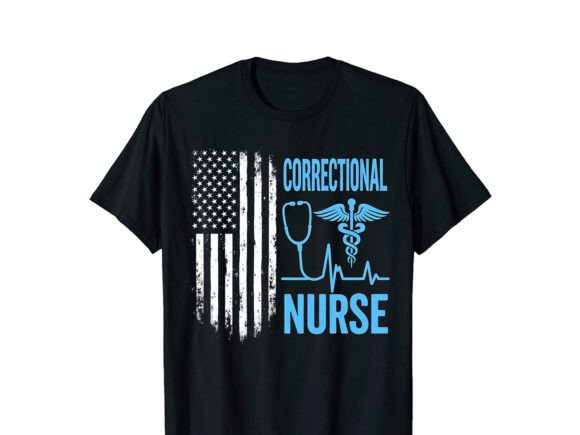
Evaluating the Correctional Nurse Design for Embroidery Projects
Let’s be honest: in the world of embroidery and apparel design, a good concept can be ruined by poor execution. As someone who stitches for clients, runs a small shop, and constantly evaluates designs for real-world use, my first question is always: “Will this design work when the needle hits the fabric?” Today, I’m putting the Correctional Nurse T-Shirt Design through that exact lens.
The First Impression: A Design with Quiet Confidence
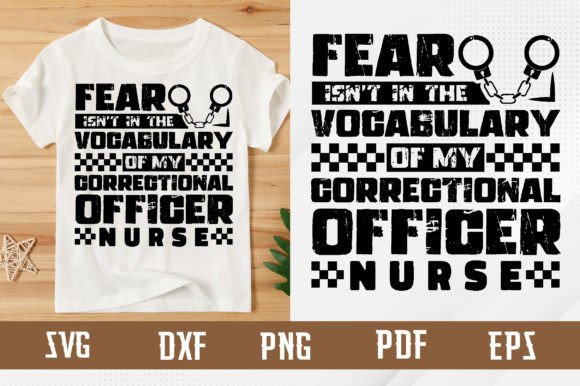
Opening the file, the immediate mood is professional, grounded, and quietly confident. It doesn’t scream or rely on flashy graphics; it feels more like a badge of honor. The layout is centered and balanced, which is a classic, safe choice for embroidery, especially on apparel. The visual personality leans towards straightforward and respectful—a theme that, when embroidered, can convey a sense of pride and identity rather than just a slogan. This isn’t a cartoon or a joke; it’s a statement piece. For embroidery, that means the stitch work needs to be clean and precise to match that tone.
Where This Design Belongs: The Natural Embroidery Project Fit
Given its theme, the most obvious home is, of course, custom apparel. But thinking beyond just a t-shirt, I envision it stitched onto a sturdy, high-quality sweatshirt for a nurse—something worn with pride after a long shift. It would look equally dignified on a tote bag used for carrying work essentials, or even as a large, centered feature on an apron for a more casual, gift-oriented project. The design’s serious nature makes it a strong candidate for personalized gifts within the nursing community, like a custom-embroidered pillow cover or a blanket for a colleague.
For a small business owner or Etsy seller specializing in niche profession-themed items, this is a solid graphic asset. It could anchor a whole product line: the same design on t-shirts, caps, and patches offers brand consistency. The included print-ready mockup is a smart bonus for creating quick listing previews, but for us embroiderers, the real test is in the stitch.
Thinking Through a Real Project: The Embroidered Tote Bag Scenario
Picture this: a client requests a custom tote bag as a gift for a correctional nurse retiring after twenty years. They want it to be durable, tasteful, and something she’ll use. I’d consider using this design. On a canvas tote, the embroidery would need to be robust. The design’s likely text elements and emblematic details would require careful attention to stitch density. Too dense, and the bag becomes stiff and prone to puckering; too light, and the design lacks presence. This is where practical judgment comes in.
The Stitching Reality: Performance on Different Surfaces
For successful machine embroidery, we have to think about surfaces. On a standard cotton t-shirt or polo, this design, given its described size, would need a sufficiently large hoop area. It’s probably best suited for the chest or back panel. On a cap or hat, with that curved surface, the centered layout works, but I’d be wary of any tiny, intricate lettering that might get lost in the seam or fail to stitch cleanly on the curved panels.
For baby clothes or lighter fabrics, I’d likely avoid it—the theme is mature, and the potential stitch area might be too heavy for delicate knit. However, on a kitchen towel or apron as a gift, it could be a charming, functional statement. The key is matching the design’s gravity with the garment’s purpose.
Where You Need to Proceed with Caution
Some applications require extra care. Stretchy fabric, like some performance tees, demands excellent stabilizer to prevent distortion of any text. Dark fabric necessitates a thoughtful thread color choice—you’ll want strong contrast so the design reads clearly from a distance, which impacts its visual appeal and perceived value. If you’re considering making an embroidered patch from this, the density of fill stitch areas must be manageable; a overly dense patch can be stiff and unwieldy to attach.
Also, consider products needing frequent washing. A design with many dense satin stitch borders or large fill areas on a sweatshirt can snag or wear over time if not stitched with quality thread and proper technique. Always test on scrap fabric first.
How the Embroidery Affects Buyer Perception and Value
When a customer sees this design expertly embroidered on a hoodie, it communicates professionalism and trust. The handmade presentation elevates it from a generic print to a valued, personalized product. For the crafter or creative entrepreneur, that enhances giftability and buyer engagement. A well-stitched version feels like an authentic tribute, not just merchandise. This is crucial for Etsy sellers and boutique owners—the finished product’s craftsmanship must reflect the design’s respectful intent.
Practical Notes for the Embroidery Designer
Before you run this machine embroidery design, do your homework. Since specific embroidery file details aren’t provided here, you must check the actual formats, stitch counts, and licensing for commercial use yourself. But based on general practice, here’s my process:
- Always test the design on a scrap of your intended fabric first. Check for puckering.
- Review the stitch density in your software preview. Are there areas that might be too thick for thin fabrics?
- Confirm your hoop size can accommodate the design dimensions comfortably.
- Inspect small details, like any serifs in lettering or fine lines. Will they stitch clearly, or blur?
- Test thread color contrast. How does it look in a black-and-white mockup? Does it have enough pop on both light and dark backgrounds?
- Use a proper stabilizer suited to your fabric—this is non-negotiable for clarity.
- Finally, clearly understand the license. Is this graphic for personal projects only, or can you sell the finished embroidered products from your craft business?
This design, as a graphic asset, has clear potential for commercial embroidery projects and digital product sellers offering custom work. Its strength is its focused theme.
The Final Verdict: A Design Worth Stitching for the Right Project
The Correctional Nurse T-Shirt Design isn’t a flash-in-the-pan trend graphic. It’s a niche, purpose-driven design. Its value in embroidery comes from its clear audience and its straightforward layout, which translates well to stitch. It won’t fit every project—it’s not for a playful baby bib or a decorative holiday ornament. But for a custom apparel piece, a professional gift, or a product line targeting the nursing and correctional community, it offers a solid, respectful foundation. Your skill as the embroiderer will determine its final impact. Stitch it cleanly, match it to an appropriate product, and it will resonate as a genuine, well-crafted item. That’s the real test of any design, and this one passes with quiet confidence.