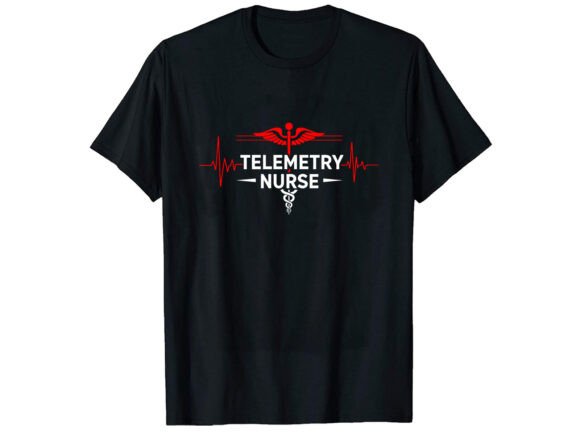
Telemetry Nurse T-Shirt Design: A Real Embroidery Review
I have been staring at the Telemetry Nurse T-Shirt Design for the better part of an hour now, and I keep coming back to one word: clarity. Not just the clarity of the graphic itself, which is genuinely sharp, but the clarity of who it speaks to and what it says. That is rarer than you might think in the world of nurse-themed digital graphics. Too many designs lean into tired clichés, but this one carries a specific professional identity that feels grounded and real. If you are an embroidery designer, a small shop owner, or a crafter building inventory for a boutique market, you know the difference between a design that tries too hard and one that simply fits. This one fits.
I am writing this review from the perspective of someone who has spent years testing digital assets on actual embroidery machines, on real fabric, under studio lights, and through the wash cycle. I care less about how a file looks on a screen and more about how it behaves when it meets thread, tension, and a paying customer's expectations. The Telemetry Nurse T-Shirt Design earned my attention because it promises something specific without overcomplicating the visual message, and that matters enormously when you start thinking about stitch conversion, product placement, and buyer psychology.
First Impression: A Graphic That Understands Its Audience
Opening the file, I immediately noticed the Telemetry Nurse T-Shirt Design has a composed, professional energy. It does not scream. It does not rely on cartoonish syringes or overused heart-rate illustrations that have been done to death. Instead, the design feels like it was built for a nurse who genuinely works in telemetry, someone who reads monitors, tracks rhythms, and understands the quiet intensity of that specialty. The mood is respectful, slightly technical, and warmly personal. The typography and layout suggest it would sit beautifully on a unisex t-shirt, a structured tote bag, or even a cozy sweatshirt without losing its identity.
From a reviewer's standpoint, the shape and composition are balanced. The design reads quickly, which is essential for wearable products. You have about two seconds to catch someone's eye at a craft fair or on an Etsy listing thumbnail. This design passes that test. The visual weight is distributed well, and there is enough open space around the main elements that it will not feel suffocated inside a standard embroidery hoop. I can already imagine it stitched out on a soft heather gray tee, the thread colors subtle but distinct, the lettering crisp and legible.
Real-Life Scenario: Planning a Custom Embroidered Sweatshirt
Earlier this week, I had a client reach out about a custom order for a telemetry nurse on her unit who was retiring after twenty-two years. The team wanted something personal, not mass-produced, something she could wear on her last shift and then keep as a keepsake. I pulled up the Telemetry Nurse T-Shirt Design and immediately started visualizing it on a mid-weight cotton crewneck sweatshirt in charcoal gray. The design's proportions felt right for a chest-sized placement, roughly eight inches wide, with enough detail to feel special but not so much that it would turn into a dense, bulletproof patch of thread.
I did a quick paper mockup, held it against the sweatshirt, and the reaction from the client over a video call was instant. She said, "That looks like her. That looks like what she actually does." That comment stuck with me because it speaks to the design's authenticity. It does not feel like a generic nurse graphic. It feels like a badge of identity. When you are building a personalized gift or a small batch of handmade products for a specific audience, that kind of recognition is everything. It tells you the designer understood the assignment.
How the Design Performs in Embroidery Scenarios
Let me walk through the practical side of things, because that is where many digital designs fall apart. The Telemetry Nurse T-Shirt Design is delivered as a PNG file at 4500×5400 pixels and 300 dpi, along with a mockup. As an embroidery digitizer, I know that a high-resolution raster file gives me a clean starting point for manual digitizing or auto-tracing, depending on the software I am using. The resolution is generous enough that I can zoom in, check edge quality, and identify exactly where satin stitches should transition into fill stitches, where running stitches can handle the finer details, and where I need to simplify for smaller hoop sizes.
On a standard t-shirt, I would likely digitize the main text elements with a medium-density satin stitch for a smooth, slightly raised finish that feels premium. The secondary visual elements, depending on their complexity, would benefit from a fill stitch with a light underlay to prevent the fabric from showing through. If I were adapting this for a cap, I would need to be selective. Caps have curved surfaces, and the design would need to be condensed or split into a left-chest-friendly format. That is not a flaw of the design, it is just the reality of embroidery on structured headwear. The same applies to baby clothes and thin fabric. A dense stitch on a lightweight onesie is a recipe for puckering. I would test the design on scrap fabric first, adjusting stitch density and stabilizer choice before committing to a final product.
Fabric and Color Considerations That Matter
One thing I always check before using any digital design in embroidery is how it reads on different fabric backgrounds. The Telemetry Nurse T-Shirt Design appears to have strong contrast built into its composition, which is a gift when you are working with dark fabrics. On a black hoodie or a deep navy tote bag, the design would need thread colors that pop without feeling harsh. I would test a few thread palettes, perhaps a soft white paired with a muted teal or a warm gold, to see what maintains the professional tone while ensuring legibility at a distance.
On textured fabrics, like a waffle-knit thermal or a loosely woven tea towel, fine details can get lost. I would recommend scaling the design up slightly on those surfaces and simplifying any very tiny elements that might blur under thread. The mockup included with the purchase is helpful for visualizing the final look, but nothing replaces a physical stitch-out on the exact fabric you plan to sell. I always advise makers to run a test on a similar fabric weight, photograph it in natural light, and compare it to the digital preview. That extra step builds customer trust and reduces returns.
Where This Design Shines and Where to Be Cautious
After evaluating the design from multiple angles, I can confidently say it will excel on a defined set of products. T-shirts, sweatshirts, and tote bags are the obvious winners. The rectangular or slightly horizontal layout adapts well to chest placements, back prints, and large pocket areas on aprons. I could also see it working beautifully on a canvas pillow cover for a nurse's home office or a cozy reading nook. The theme is niche enough to feel personal but broad enough to attract buyers who appreciate the telemetry specialty.
For small hoop sizes, caution is needed. If you are using a 4x4 hoop, the design may need to be simplified or split into multiple hoopings, which is not always practical for production. I would recommend a 5x7 hoop or larger for the best balance of detail and stitchability. For patches, the design would need a merrowed edge or a satin-stitch border, and the text elements must be checked at the reduced size. Tiny lettering under five millimeters in height can close up under thread, especially on fleece or plush surfaces. Test, test, test.
Product Appeal and Buyer Psychology
From a business perspective, the Telemetry Nurse T-Shirt Design taps into a specific, proud professional identity. Nurses in telemetry often work in high-stress environments, and they carry a quiet pride in their ability to read complex data and act quickly. A product that honors that is not just a t-shirt, it is a statement. When I think about listing a finished product on Etsy or displaying it at a craft fair, I can imagine the conversations it would start. A customer might pick it up, smile, and say, "My sister does that. She would love this." That emotional connection is what turns a handmade product into a meaningful gift and a repeat purchase.
For small business owners building a brand around medical professional apparel, this design adds depth to a product line. It is not the generic "nurse life" graphic that every other shop carries. It is specific, and specificity builds trust. Customers feel seen. They feel like the maker actually understands their world. That translates to higher conversion rates, better reviews, and stronger word-of-mouth marketing. I would absolutely feel confident using this design as part of a curated collection for healthcare workers.
Practical Embroidery Designer Notes
Before you load this design onto your machine, I want to share a few notes that come from years of trial and error. First, always check the licensing terms. The product description indicates you receive a PNG file and a mockup, but it is your responsibility to confirm whether the design is cleared for commercial use on finished physical products. Most reputable sellers include a license summary, but if it is not clear, reach out and ask. Do not assume.
Second, test the design in black and white. Convert the PNG to grayscale and see if the contrast still holds. If it does, you have a versatile design that will work on almost any fabric color. If it does not, you will know exactly where to adjust your thread choices before you stitch. Third, always use the right stabilizer for your fabric. A cutaway stabilizer on knits, a tearaway on wovens, and a water-soluble topper on towels or fleece can make the difference between a professional finish and a disappointing result.
Finally, check your hoop size against the design's intended dimensions. The 4500×5400 pixel canvas at 300 dpi translates to roughly 15 by 18 inches at full size, which is massive. You will obviously scale it down for embroidery, but the high resolution gives you the flexibility to do so without losing quality. For a left-chest logo, aim for around 3.5 to 4 inches wide. For a full front print, 8 to 10 inches is a sweet spot. Always digitize at the final size, not at the original canvas size, and adjust stitch density accordingly.
Will the Design Hold Up Over Time
Durability is a question I get asked constantly by handmade shop owners. Customers want to know if their embroidered sweatshirt will survive dozens of washes, if the thread will fade, if the design will peel or crack. The longevity of an embroidered product depends far more on digitizing quality, thread choice, and stabilizer than on the source graphic itself. However, a clean, well-structured design like the Telemetry Nurse T-Shirt Design gives you a head start. Clear edges, strong contrast, and logical composition make digitizing easier and more accurate, which leads to a better stitch file and a more durable finished product. I would trust this design on items that are meant to be worn and washed regularly, as long as the embroidery is executed well.
Final Thoughts on Creative Versatility
Beyond the obvious t-shirt and sweatshirt applications, I see real potential for this design in unexpected places. A set of embroidered kitchen towels for a nurse's home, a canvas tote for carrying scrubs to the hospital, a patch sewn onto a lab coat lining, a framed hoop art piece for a nursing station break room. The Telemetry Nurse T-Shirt Design has enough personality to carry each of those projects while staying true to its core identity. It is not trying to be everything to everyone, and that restraint is exactly what makes it valuable.
For embroidery designers, craft business owners, and digital product sellers, finding a graphic that balances visual appeal with practical usability is not always easy. This one does it. It respects the craft, understands the end user, and gives you a solid foundation to build something meaningful. Whether you are preparing inventory for a holiday market, filling a custom order for a retiring nurse, or adding a new listing to your Etsy shop, the Telemetry Nurse T-Shirt Design is a resource worth keeping in your toolkit. Just remember to test it thoroughly, choose your thread colors with intention, and never skip the stabilizer. Your customers will notice the difference, and so will you.